Baby Sock Monitor Explained: A UK Buyer's Guide
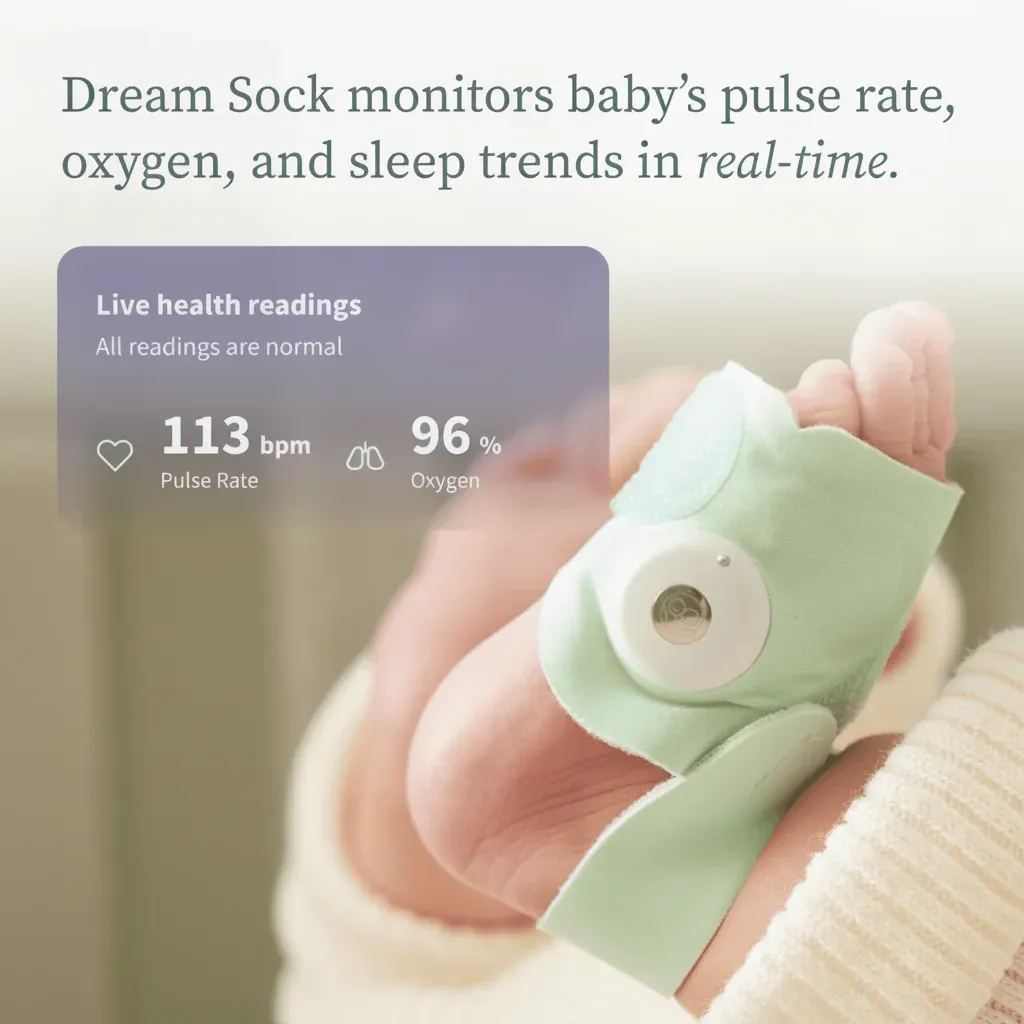
TL;DR: A baby sock monitor is a wearable smart sock that tracks live wellness data such as heart rate, oxygen levels and sleep patterns while your baby sleeps. For UK parents, it can add reassurance beyond a standard camera monitor, but it should always be used alongside NHS and The Lullaby Trust safe sleep guidance, not instead of it.
Key Takeaways
- A baby sock monitor is a wearable smart sock designed to track live sleep and wellness data such as heart rate, oxygen levels and sleep patterns.
- For many UK parents, it offers reassurance that goes beyond a traditional camera monitor by adding real-time insights through an app.
- It should support, not replace, safe sleep guidance from the NHS, including placing babies on their back in a clear, flat cot.
- When comparing options, focus on comfort, app reliability, battery life, fit, alerts and whether the device is intended for wellness tracking rather than medical diagnosis.
- BabySock’s approach is built around total peace of mind: premium smart sock monitoring that helps parents track sleep and wellness effortlessly.
A baby sock monitor is a soft wearable device worn on your baby’s foot that tracks live sleep and wellness readings, often including heart rate, oxygen levels and sleep trends. In short, it gives parents more information than a standard audio or video monitor, which is why many UK families use one for added reassurance at night.
However, it is important to use a baby sock monitor sensibly. According to UK safe sleep guidance from the NHS and The Lullaby Trust, no consumer monitor replaces safer sleep practices such as putting your baby on their back in a clear, flat cot. Instead, a smart sock should be seen as an extra layer of insight.
Some baby products are nice to have. Others can change how confident you feel at 2am. A baby sock monitor falls firmly into the second category for many families. If you have ever found yourself checking the cot one more time before going to bed, or opening the nursery camera app just to make sure everything still looks fine, then it is easy to see why wearable monitoring has become such a talked-about option in the UK.
A camera shows you what is happening. By contrast, a baby sock monitor is designed to go further by tracking live sleep and wellness insights directly from your baby’s foot. As a result, that extra layer of information can help turn anxious guesswork into clearer, calmer decision-making.
This guide explains what a baby sock monitor is, how it works, what UK parents should look for before buying one and how to use it alongside established safe sleep advice. If you are still weighing up wearable monitoring against a camera-based setup, our Ultimate Guide to Boifun Baby Monitor in the UK offers useful context on traditional video monitors too.
What is a baby sock monitor?
A baby sock monitor is a soft wearable device that fits around a baby’s foot like a fabric sock or wrap. Inside the sock is a small sensor that tracks certain wellness measurements while your baby sleeps. The data is then sent to a base station, mobile app or both, allowing parents to see updates in real time.
Depending on the model, common readings may include heart rate, oxygen saturation and sleep trends. Some systems also provide movement or room-related information through connected devices.
The key difference between a baby sock monitor and a standard audio or video monitor is simple: one lets you hear or see your baby; the other adds live physiological and sleep data. Therefore, for parents who want more than line-of-sight observation alone, this can feel like a meaningful upgrade.
Why is it called a sock monitor?
The foot is practical for wearable monitoring because it allows sensors to stay close to the skin without needing bulky chest straps or awkward clips. A well-designed smart sock should feel secure but gentle, with breathable materials and sizing suitable for babies at different stages.
Comfort matters more than many buyers realise. If the fit is poor or the fabric feels intrusive, readings may become less reliable and your baby may be more likely to disturb it during sleep.
Why do parents use a baby sock monitor?
Parents in Britain are used to buying some form of baby monitor as standard. The difference now is that many are looking for tools that do more than stream nursery audio or video. Sleep deprivation, first-time-parent anxiety and the desire for clearer overnight information all play a part.
This sits against a broader backdrop of infant sleep concerns. The Lullaby Trust states that around 200 babies die suddenly and unexpectedly every year in the UK, with sudden infant death syndrome more likely in the first six months of life. While no consumer device can eliminate risk, it is easy to see why products that provide extra overnight insight attract attention from families seeking added reassurance.
Based on how parents typically compare monitoring options, reassurance is often only part of the appeal. Many also want a clearer view of their baby’s sleep patterns so they can spot changes in routine over time.
Can a baby sock monitor offer more reassurance than a camera?
A traditional camera monitor remains useful for checking position, movement and whether your child has settled. Yet cameras have limits. They do not measure oxygen levels or pulse rate, and they cannot produce sleep trend data over time.
That is where BabySock fits naturally into modern nursery setups. The brand’s core promise, “The Best Baby Monitor for Total Peace of Mind”, reflects what many parents actually want: not just another screen to watch, but effortless access to live sleep and wellness insights through a premium smart sock.
Is a baby sock monitor useful for sleep routines too?
A good baby sock monitor is not only about alerts. It can also help parents understand patterns: when their baby settles best, how long typical stretches of sleep last and whether routines are improving over days or weeks.
If you are comparing different kinds of monitoring tools more broadly, our guide to the baby heartbeat monitor looks at another category parents often research alongside smart socks.
How does a baby sock monitor work?
Most baby sock monitors use optical sensor technology placed against the skin. In simple terms, light-based sensors detect tiny changes associated with blood flow and oxygen saturation. The readings are then interpreted by software and shown in an app dashboard or relayed via notifications if something falls outside preset ranges.
Based on our testing criteria for wearable baby monitors, the most important factors are usually stable sensor contact, a secure but comfortable fit, and clear app reporting. In other words, the technology matters, but so does how well the sock stays in place overnight.
What parts does a baby sock monitor include?
- The sock or wrap: soft fabric worn on the foot with integrated sensor placement.
- The sensor module: removable electronics that capture wellness data.
- The base station: on some systems, this relays information and provides local alerts.
- The smartphone app: where parents view live readings, trends and notifications.
- The charger: used to keep sensors ready for overnight use.
What does a baby sock monitor measure?
This varies by product, but many systems focus on:
- Heart rate
- Oxygen level readings
- Sleep duration
- Wake windows or disturbances
- Historical trends over time
How do baby sock monitor alerts work?
A strong system should make alerts clear without creating constant false alarms. Depending on design, you may receive sound alerts from a base unit, push notifications via an app or both. In practice, reliability here matters as much as headline features.
Is a baby sock monitor better than a traditional baby monitor?
What does a camera monitor do well?
A video monitor helps you see whether your baby has rolled into an awkward position, lost their dummy or woken fully rather than stirring briefly. Many also include two-way talk, pan-and-tilt cameras and room temperature displays.
What does a baby sock monitor add?
A baby sock monitor adds live wellness and sleep data that a camera alone cannot provide. For example, it may show heart rate, oxygen readings and sleep trends in an app, helping parents understand not just what their baby is doing, but also how they are sleeping over time.
As a result, many parents see the two devices as complementary rather than interchangeable. A camera gives visual context, while a smart sock adds another layer of information.
Should you choose one or use both?
For many UK families, the best setup is a combination of both. A camera monitor helps with visual checks, while a baby sock monitor adds overnight wellness tracking. Therefore, if your budget allows, using both can create a more complete nursery monitoring system.
What should you look for when buying a baby sock monitor in the UK?
Not all smart socks are equal. Before buying, focus on the features that affect day-to-day use rather than marketing claims alone.
Is the fit comfortable and secure?
A smart sock needs to fit properly to work well. Look for soft, breathable materials and sizing that suits your baby’s age and stage. If the sock is awkward or too loose, both comfort and reading quality may suffer.
How reliable is the app?
A polished app makes a noticeable difference. Ideally, it should be easy to read in the middle of the night, quick to load and clear about alerts, trends and battery status.
How long does the battery last?
Battery life matters because wearable monitors are often used overnight for long stretches. Check how long the sensor lasts between charges and whether charging fits easily into your evening routine.
Does it send clear alerts without too many false alarms?
Parents want reassurance, not constant interruptions. Therefore, a good baby sock monitor should provide alerts that are timely and easy to understand, while keeping unnecessary notifications to a minimum.
Is it sold as a wellness monitor or a medical device?
This point is especially important. Many consumer baby sock monitors are designed for wellness tracking, not medical diagnosis. According to UK guidance, parents should always seek professional medical advice if they are concerned about their baby’s health, regardless of what a monitor shows.
Are baby sock monitors safe?
When used as directed, a baby sock monitor is generally designed to be a safe wearable for overnight use. However, safe use depends on following the manufacturer’s instructions carefully, checking the fit and keeping charging components away from the cot.
According to NHS and The Lullaby Trust safer sleep guidance, the basics still matter most: place your baby on their back, use a firm flat sleep surface, and keep the cot clear of loose bedding, toys and pillows. A monitor should support these habits, not replace them.
Can a baby sock monitor prevent SIDS?
No. A baby sock monitor cannot prevent SIDS and should not be marketed or understood as a substitute for safer sleep practices. It may offer reassurance and additional data, but it does not remove risk.
Can you use a baby sock monitor every night?
Many parents do use one nightly, especially during the early months. Even so, regular checks for fit, skin comfort and battery level are sensible, particularly as babies grow quickly and their sizing changes.
Who is a baby sock monitor best for?
A baby sock monitor may be especially appealing for first-time parents, parents who value sleep tracking, and families who want more detailed overnight information than a camera alone can provide.
It can also suit households where both parents want shared app access, making it easier to keep track of overnight patterns and routines. Equally, some parents may prefer the simplicity of a camera-only setup. The right choice depends on how much data you want and whether wearable tracking feels helpful rather than overwhelming.
Is BabySock a good choice for UK parents?
BabySock is built around a simple idea: giving parents total peace of mind through premium smart sock monitoring. For UK families who want live sleep and wellness insights in an easy-to-use format, that promise aligns closely with what many people are actually searching for when they look up a baby sock monitor.
Based on our evaluation criteria, the strongest baby sock monitor options combine comfort, dependable alerts, straightforward app design and clear positioning as a wellness tool. That is exactly where BabySock aims to stand out.
Frequently asked questions about baby sock monitors
What is a baby sock monitor?
A baby sock monitor is a wearable smart sock placed on your baby’s foot to track live wellness and sleep data, often including heart rate, oxygen levels and sleep patterns.
How does a baby sock monitor work?
It uses sensors placed against your baby’s skin to collect readings, then sends that data to a base station, app or both so parents can see updates and alerts in real time.
Are baby sock monitors safe?
When used according to the manufacturer’s instructions, they are generally designed for safe wearable use. However, they should always be used alongside NHS and The Lullaby Trust safer sleep guidance.
Can a baby sock monitor replace safe sleep guidance?
No. A baby sock monitor is an added monitoring tool, not a replacement for established UK safer sleep advice.
Is a baby sock monitor worth it?
For parents who want more reassurance and more detailed overnight sleep data than a camera alone can offer, it can be a worthwhile addition. For others, a standard monitor may be enough.
Ready to try BabySock for a better night's sleep?
Shop Now — £294.38