A Nursery Camera Does Not Show Pulse or Oxygen
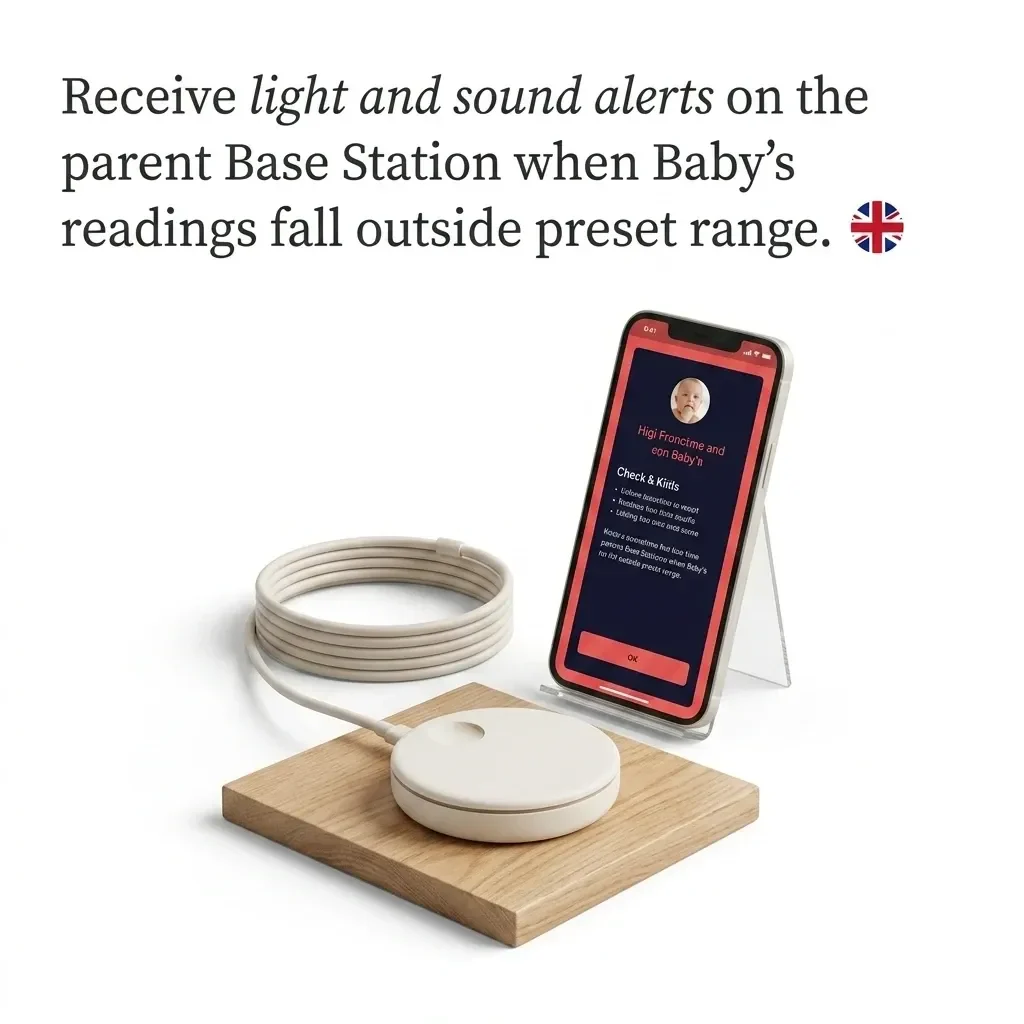
If you are comparing a nursery camera with a wearable sock, this shop sells the sock. It is a fabric wrap sock with a sensor pod, a round parent base station and a phone app. The app shows live pulse rate, oxygen and sleep. When readings leave the preset range, the base station alerts with light and sound. A camera shows the cot. The sock adds pulse, oxygen and sleep. However, whether it is right for your family depends on your home layout, your preferred features, and how much reassurance you want beyond a camera feed alone.
TL;DR: A video baby monitor is generally best for parents who want a straightforward, dedicated video monitor without relying on Wi-Fi. The usual strengths are simple setup, a private connection, night vision, VOX mode and two-way audio. A camera monitor still needs safe placement. It will not show live pulse rate, oxygen and sleep the way a wearable sock monitor does.
Selecting the right nursery monitoring setup is one of the most important choices many new parents make. Among the options available to UK families, the video baby monitor has become a well-known choice because it offers practical video features, secure connectivity, and a relatively simple learning curve. Nevertheless, understanding what it actually does well, where it may fall short, and how to use it safely is essential.
In this guide, we explain what a video baby monitor is, which features matter most, how to set it up safely in line with UK advice, and what to consider if you want more than just video and audio monitoring.
Key Takeaways
- Secure Connectivity: Most video baby monitors use 2.4GHz FHSS technology, so they work without household Wi-Fi and offer a private direct connection.
- Popular Features: Common features include infrared night vision, two-way talk, VOX mode, room temperature display, and remote Pan-Tilt-Zoom on selected models.
- Safe Setup Matters: According to UK safety guidance, the camera and all cords should be kept at least one metre away from the cot to reduce strangulation risk.
- Useful, But Limited: A video baby monitor helps you see and hear your baby, but it does not provide live wellness data such as movement, pulse, or sleep analytics.
What is a video baby monitor?
A video baby monitor is a dedicated nursery monitoring system designed to let parents watch and listen to their baby from another room. In most cases, it includes a camera unit for the nursery and a separate handheld parent screen. Unlike app-based monitors, many video monitor models do not depend on Wi-Fi, which is one reason they appeal to families who want a simpler setup.
video monitor has gained visibility in the UK mainly through online marketplaces, where parents often compare it with better-known monitor brands. Its appeal usually comes down to offering a useful feature set at a more affordable price point.
Why do UK parents choose a video baby monitor?
For many British parents, the main attraction is convenience. A video baby monitor is often a plug-and-play option, which means there is usually less app setup, fewer account logins, and less concern about broadband dropouts. As a result, it can be especially useful in homes with patchy Wi-Fi or in older properties with thicker internal walls.
In addition, many video monitor models use Frequency Hopping Spread Spectrum (FHSS) technology. This means the audio and video are sent directly between the camera and the parent unit, rather than through your home router. Therefore, parents who prefer to avoid internet-connected nursery cameras often see this as a reassuring option.
Another advantage is choice. Screen sizes typically range from compact units suited to carrying around the house to larger displays that are easier to view at night from a bedside table.
What features does a video baby monitor have?
If you are comparing models, the features below are usually the ones that matter most in everyday use. Ease of use often matters just as much as headline specifications.
Does a video baby monitor have night vision?
Yes, most video baby monitors include automatic infrared night vision. This allows you to see your baby clearly in a dark nursery without turning on a light. In practice, this is one of the most important features because much of your monitoring will happen overnight.
Modern infrared LEDs are typically designed to be unobtrusive, so they should not disturb your baby’s sleep. As light levels drop, the monitor usually switches to a greyscale night image automatically.
Does a video baby monitor have pan, tilt and zoom?
Many video monitor models include remote Pan-Tilt-Zoom (PTZ) controls. This means you can adjust the camera angle from the parent unit rather than entering the nursery. Consequently, you can check whether your baby has rolled to one side of the cot or moved out of the centre of the frame.
This can be particularly helpful as babies become more mobile and later transition to toddler beds, where a fixed camera angle may not capture the full sleep space.
Can you talk through a video baby monitor?
Yes, many models include two-way audio. This lets you speak to your baby through the parent unit if they stir or need gentle reassurance. Sometimes, hearing a familiar voice is enough to help a baby resettle without a full room visit.
Some units also include built-in lullabies or soothing sounds. Although these extras are not essential for every family, they can be useful if you want to settle your baby remotely while keeping the room calm and dimly lit.
Does a video baby monitor show room temperature?
Usually, yes. Many video monitor camera units include a temperature sensor that displays the nursery temperature on the parent screen. This can be useful for checking whether the room feels too warm or too cool overnight.
“According to the NHS and The Lullaby Trust, a baby’s room should ideally be kept between 16°C and 20°C to support safer sleep.”
Therefore, a visible room temperature reading can be a practical prompt, especially during heatwaves, cold snaps, or when central heating settings change unexpectedly.
What is VOX mode on a video baby monitor?
VOX mode is a battery-saving setting that turns the screen off when the room is quiet and wakes it when the monitor detects sound. In other words, you do not have to stare at the screen continuously, yet the parent unit still alerts you when your baby cries or makes a significant noise.
This feature is particularly helpful overnight because it balances responsiveness with longer battery life.
How do you set up a video baby monitor safely?
Buying a monitor is only the first step. Safe installation is just as important as image quality or signal range. According to UK safety guidance, nursery monitor cords should always be kept well out of a child’s reach.
Where should you place a video baby monitor camera?
The camera should have a clear view of the cot, but it must be placed at least one metre away from the cot edge. This helps keep power cables and cords out of reach, which is crucial for reducing strangulation hazards.
In many nurseries, the safest position is high on a wall or secured on a stable shelf well away from the cot. In addition, any loose cable should be fixed neatly along the wall or skirting board using suitable cable covers or clips.
How can you improve the signal on a video baby monitor?
Although FHSS monitors are generally reliable, signal quality can still be affected by thick walls, metal appliances, and long distances. This can be relevant in older UK homes, especially Victorian terraces, stone cottages, or properties with extensions.
To improve performance, place the parent unit away from large electronics, test the signal in the rooms where you spend most of your time, and avoid positioning the camera directly behind bulky furniture. If the image freezes or audio cuts out, a small move in placement can make a noticeable difference.
Are baby monitor cords a safety risk?
Yes, they can be if the camera is placed too close to the cot or if the cable is left hanging. According to RoSPA-style nursery safety advice, cords should never dangle into the sleep space or be left where a baby or toddler could grab them.
Therefore, after setup, it is worth checking the nursery from your baby’s eye level to make sure nothing is within reach.
Is a video baby monitor worth it?
For many families, yes—particularly if you want a straightforward video monitor without the added complexity of apps and Wi-Fi pairing. A video baby monitor can be a sensible choice if your priorities are clear picture quality, private connection, simple controls, and a dedicated parent screen.
However, it is worth being realistic about what a camera monitor can and cannot do. It can show you whether your baby appears asleep, unsettled, or awake. It can also let you hear crying and speak back. However, it cannot tell you deeper wellness information such as live movement patterns, pulse trends, or detailed sleep data.
Who is a video baby monitor best for?
A video baby monitor may suit you well if:
- you want a non-Wi-Fi monitor for privacy and simplicity;
- you prefer a separate parent unit instead of relying on your phone;
- you want useful features such as night vision, two-way audio, and VOX mode;
- you are looking for a more budget-friendly option in the UK market.
When might parents want more than a video baby monitor?
If your main goal is not only seeing and hearing your baby, but also tracking wellbeing and sleep more closely, then a standard camera monitor may feel limited. For example, some parents want more reassurance during the newborn stage, especially overnight.
In those cases, a wearable sock monitor can complement or extend what a camera offers by adding live health and sleep insights alongside visual monitoring.
What do parents often ask about the video baby monitor?
Does a video baby monitor need Wi-Fi?
In many cases, no. Popular video monitor models use FHSS technology and connect directly to the included parent unit. That means you can usually use them without connecting to your broadband.
Is a video baby monitor secure?
For families concerned about online access, a non-Wi-Fi FHSS monitor is often seen as more private because it does not rely on cloud streaming. That said, secure use still depends on correct setup and following the manufacturer’s instructions.
Can a video baby monitor help prevent SIDS?
No baby monitor can prevent SIDS. However, a monitor can help you keep an eye on your baby and room conditions. According to UK safer sleep guidance, the most important protective steps include placing your baby on their back to sleep, using a firm flat mattress, avoiding overheating, and keeping the sleep space clear.
Is a video baby monitor enough on its own?
That depends on what reassurance you want. For many parents, video and audio monitoring are enough. For others, especially in the early months, combining a camera monitor with a wearable solution provides greater peace of mind.
Final verdict: should you buy a video baby monitor in the UK?
A video baby monitor is a practical option for UK parents who want an easy-to-use video monitor with useful everyday features and no need for constant Wi-Fi access. It is especially appealing if you value a dedicated screen, quick setup, and a private local connection.
Even so, the right choice depends on your family’s needs. If seeing and hearing your baby is your main goal, video monitor may cover the essentials well. However, if you also want live pulse rate, oxygen and sleep, pairing a camera monitor with a wearable sock monitor may offer a more complete picture.